They brought me in for leads
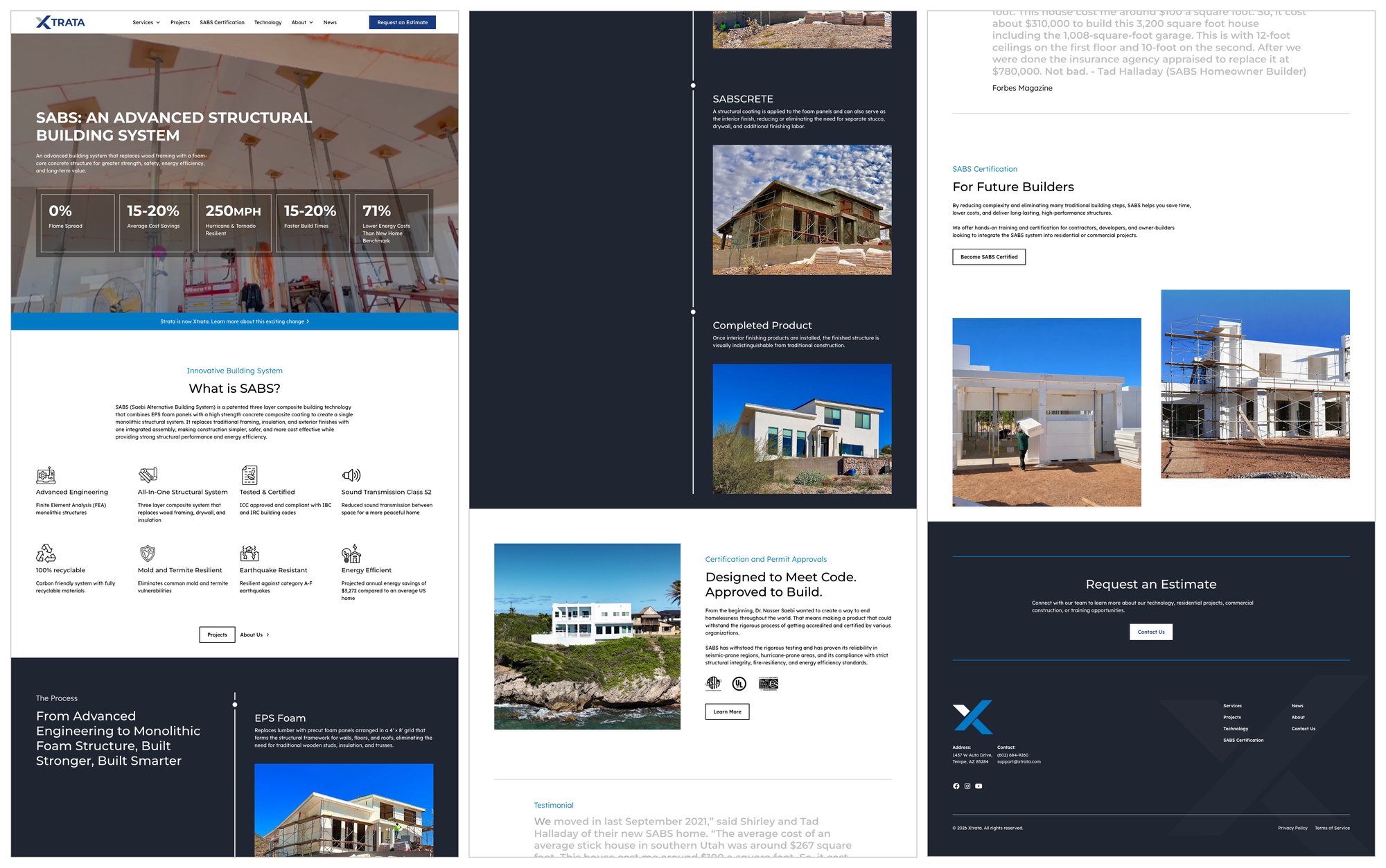
Xtrata makes a patented prefabricated panel wall system, SABS, out of a factory in Arizona. It had the two things a young building-products company rarely has at the same time: a product that general contractors and developers liked once they saw it installed, and real capacity to make it. What it did not have was a way to sell a building system to the people who actually decide whether one gets used.
The company reached me through a third party who was bringing people with construction reputations into the business. The ask was narrow. Leadership believed the problem was coverage, too few leads reaching the factory, and I ran a general contracting and development business with builder and developer relationships they wanted access to. So the seat opened as lead generation, with the manufacturer's VP of Operations sourcing leads through me and LÏEF Development pricing and bidding the installation on the jobs that came in.
I started on the same assumption leadership held. Nothing in the first months argued otherwise, and I say that plainly because the reframe that follows came from data, not from instinct at the outset.
The people in the room were the manufacturer's VP of Operations, who owned pricing and the labor logic inside the company; a sales team that was selling the system the way you sell a product; the general contractors' and developers' estimators who received our bids; and the architects whose drawings the bids were built on. Every one of those seats mattered to the diagnosis, because the deal was not dying where leadership thought it was.
Where the system was being sold
The sales collateral under this seat addresses six kinds of work: industrial, quick-service restaurant, hospitality, multifamily, office and education.
Run the bid data before adding a single rep
A lead-generation ask that arrives with no question about whether the leads already in hand are converting is a tell. It is a specific, checkable thing, an expansion request that skips the diagnostic step, and the check it triggers is cheap enough to run every time: price the whole pipeline before spending on volume. Sometimes the check finds nothing and the channel really is thin. This time it found the problem.
Every bid the channel had produced, from small accessory dwelling units to an extended-stay hotel joint venture, told the same story once they were side by side. Pricing ran from a premium over wood framing to near parity, with no formula connecting one quote to the next. A general contractor's estimator could ask why the number was what it was and get a different answer depending on who in the company answered. Deals were not dying in the top of the funnel. They were dying at the bid desk, at the second question.
That changed what the seat was for. You cannot fix a funnel whose bottom leaks by pouring more into the top, and a rate is defensible only when it is derived from real bids and checked by someone outside the building. A distributor of a building system sells a cost per square foot, whatever else is true about the product. So the work became: put every bid in one place, find the pattern, turn the pattern into a rate, get the rate checked by the people who would otherwise argue with it, then change the pitch to match what the number proved.
I told them their diagnosis was wrong, which is not the conversation anyone hires you for.
Telling a paying client that its own read of its problem is incorrect, and asking for room to fix pricing instead of adding reps, was the hard conversation in this sequence. I was candid about my own interest in it. I wanted the SABS work, and I wanted to turn a lead-referral relationship into a standing framework, so the case had to be made on their data, not my preference. The seat continued on a pricing-first premise, with the lead channel left running, rather than being pointed back at volume.
How I came at this one
I asked where the deals were actually dying before I asked how many were coming in. That question fit because a manufacturer with a good product and a bid desk that cannot repeat a number has a pricing problem wearing a marketing costume, and the only way to see it is to price the whole book at once. The second question was harder: someone has to tell leadership the diagnosis is wrong, and in a sales-led company that person has to bring the bid data with him.